

Ken Loach - Happy 90th birthday
Written by Eva Csölleová, Vítek Formánek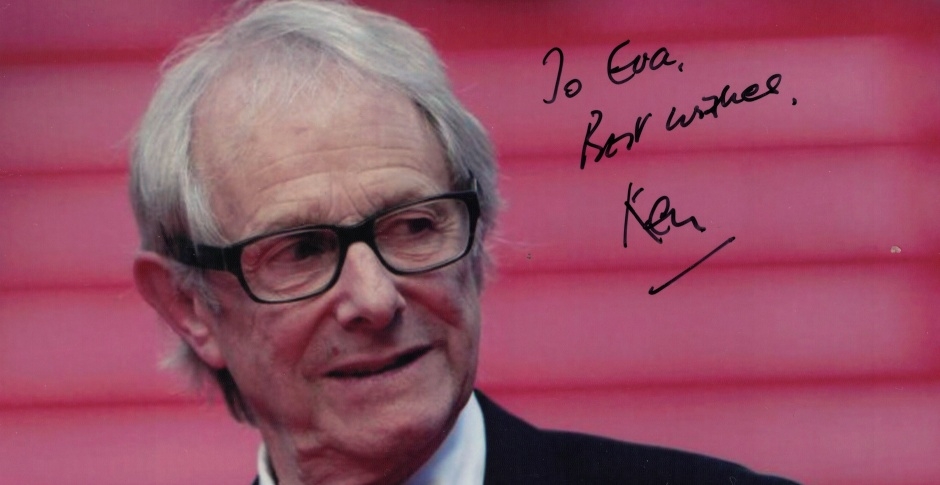
Extraordinary English filmmaker Ken Loach will celebrate his 90th birthday on 17 June and we would like to pay him a homage with our article.
We have never met him, but he must be a good man who cares about others and who tried to point at some sore points in British society during his entire career.His socially critical directing style and socialist views are evident in his film treatment of social issues such as poverty (Poor Cow, 1967), homelessness (Cathy Come Home, 1966), and labour rights (Riff-Raff, 1991, and The Navigators, 2001).
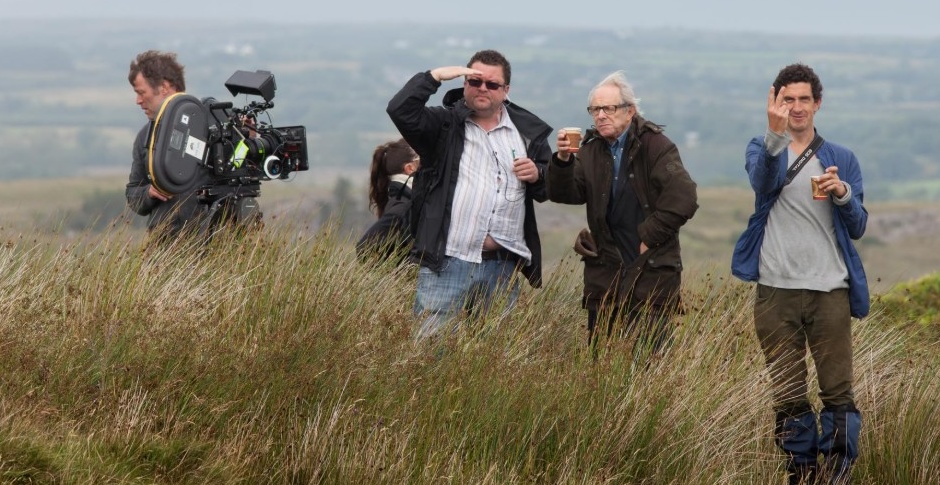
The first of his films we have seen in our teens was Kes and we still love him today. It recounts the story of a troubled boy named Billy Casper and his kestrel, and is based on the novel A Kestrel for a Knave by Barry Hines. The film was well received and The British Film Institute named it No 7 in its list of best British films of the twentieth century, published in 1999. Ken Loach also holds the record for the most films screened in the main competition at Cannes with 15 andtwo of his films, The Wind That Shakes the Barley (2006) and I, Daniel Blake (2016), received the Palme d'Or at the Cannes Film Festival, making him one of only ten filmmakers to win the award twice.
Ken Loach always went his way and made films with important message or view
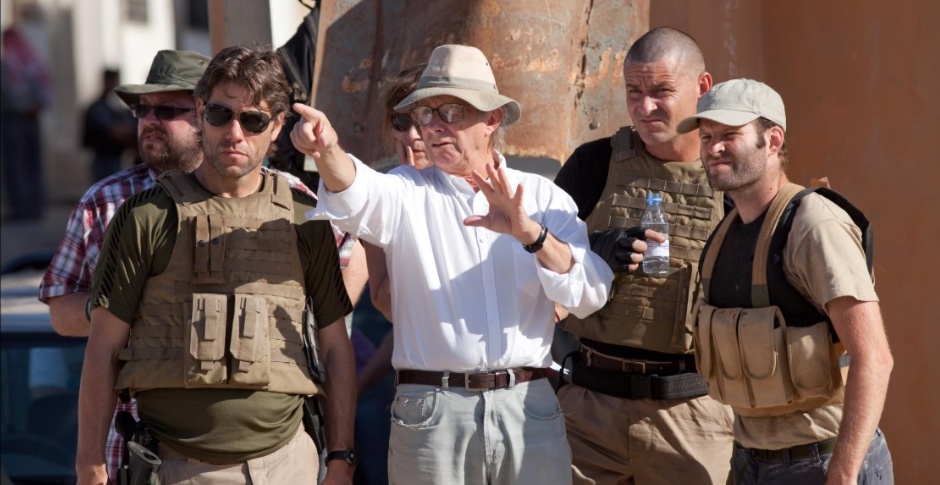
He firstly worked as an actor in regional theatre companies and then as a director for BBC Television. His 10 contributions to the BBC's Wednesday Play anthology series include the docudramas Up the Junction (1965), Cathy Come Home (1966) and In Two Minds (1967). They portray working-class people in conflict with the authorities above them. Loach began to direct feature films for the cinema, with Poor Cow (1967) and Kes (1969) but during the 1970s and 1980s, his films were less successful, often suffering from poor distribution, lack of interest and political censorship. He always went his way and made films with important message or view so it is not surprise that he often got negative reaction from authorities. Establishment and powers-that-be didn´t and don´t like when someone points that what they do is not flawless and in fact doesn´t work. Sex Pistols experienced that in punk rock, Ken Loch in film industry. For example in his documentary A Question of Leadership (1981) interviewed members of the Iron and Steel Trades Confederation (the main trade union for Britain's steel industry) about their 14-week strike in 1980, and recorded much criticism of the union's leadership for conceding over the issues in the strike. The series was due to be broadcast during the Trades Union Congress conference in 1983, but Channel 4 decided against broadcasting the series following the complaints. Another example was Which Side Are You On? (1985), about the songs and poems of the UK miners' strike, that was originally due to be broadcast on The South Bank Show, but was rejected on the grounds that it was too politically unbalanced for an arts show. The documentary was eventually transmitted on Channel 4, but only after it won a prize at an Italian film festival.
Ken Loach admitted that these following three films that have influenced him most: Vittorio De Sica's Bicycle Thieves (1948), Miloš Forman's Loves of a Blonde (1965) and Gillo Pontecorvo's The Battle of Algiers (1966). De Sica's film had a particularly profound effect. He noted: "It made me realise that cinema could be about ordinary people and their dilemmas. It wasn't a film about stars, or riches or absurd adventures."
Throughout his career, some of his films have been shelved for political reasons, to which he reacted: „It makes you angry, not on your own behalf, but on behalf of the people whose voices weren't allowed to be heard. When you had trade unions, ordinary people, rank and file, never been on television, never been interviewed, and they're not allowed to be heard, that's scandalous.“
He argues that working people's struggles are inherently dramatic: „They live life very vividly, and the stakes are very high if you don't have a lot of money to cushion your life. Also, because they're the front line of what we came to call the class war. Either through being workers without work, or through being exploited where they were working. And I guess for a political reason, because we felt, and I still think, that if there is to be change, it will come from below. It won't come from people who have a lot to lose, it will come from people who will have everything to gain.“
Loach was amongst the first British directors to use swearing in his films. In particular, the film Sweet Sixteen was awarded an 18 certificate on the basis of the very large amount of swearing, despite the lack of serious violence or sexual content, which led him to encourage under-18s to break the law to see the film.
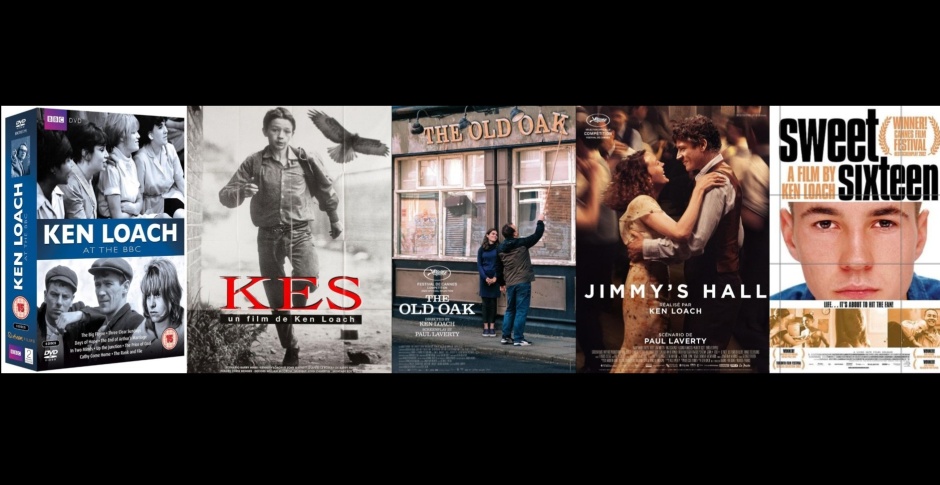
Many of his films also include a large amount of traditional dialect and many of these films have been subtitled when shown in other English-speaking countries.
That some people didn´t get the point of his films but has to criticise at any cost shows the case from 2014 when feminist writer Julie Bindel criticised in her article Loach's recent films for a lack of female characters who were not simply love interests for the male characters, although she praised his early films Cathy Come Home and Kes. She also wrote, "Loach appears not to know gay people exist". In the article, Bindel stated that she "hadn’t seen a Ken Loach film in years", and only made reference to the content of one of Loach's films in support of her argument, the then-recently released Jimmy's Hall Such politically correct articles really sucks and shows the “intelect“ of a writer.
One of the films that had great influence at me was Forman´s Loves of a Blonde
Mr. Loach calls spade a spade and as a social campaigner for most of his career he said in 2016 : „…that the criteria for claiming benefits in the UK were a Kafka-esque, Catch-22 situation designed to frustrate and humiliate the claimant to such an extent that they drop out of the system and stop pursuing their right to ask for support if necessary."
Unlike many awarded people, he stood by his principles and proudly turned down an OBE in 1977. In a March 2001 Radio Times interview, he said, "It's all the things I think are despicable: patronage, deferring to the monarchy and the name of the British Empire, which is a monument of exploitation and conquest. I turned down the OBE because it's not a club you want to join when you look at the villains who've got it.“
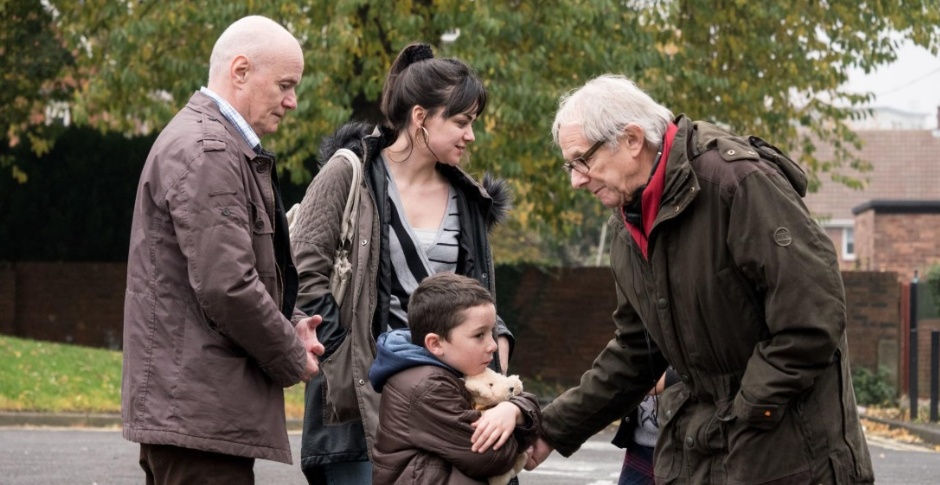
In November 2012, he turned down the Turin Film Festival award, upon learning that the National Museum of Cinema in Turin had outsourced cleaning and security services. The museum outsourced this labour after dismissing workers who opposed a wage cut, in addition to raising allegations of intimidation and harassment. Loach publicly stated that his refusal to accept the award from the museum was an act of solidarity with these workers.
He also have very strong and interesting views at the film industry and we can only agree with him. He says that:
„The Europeans, particularly the French and the Italians, have a different view of cinema. It’s taken more seriously. It’s a much wider view of what cinema can do. They have traditions of their own cinema that are political. The Italian neorealist films, east European films, French films, they’re much wider. There’s more of a sense that the film is a serious art form as well as being a commodity.We are cursed with the Americans speaking our language – the cinema in Britain has always been subservient to the US. You saw the consequences – and still do, when the writers’ strike in Hollywood closed down the British film industry almost entirely. We are simply an outpost for American investment, and we don’t have an independent British film industry that can sustain itself. Our film industry is colonised.“
When asked about focusing most of his film at the working class people, he replies:
„We have to tell the story of the working class, to tell the story of their struggles, to show where we could have won, where we might have won, and the class forces against us. That’s the essential subject matter. That’s why the working class is the essential subject that we have to make films about, because it is the class that can make the changes.“
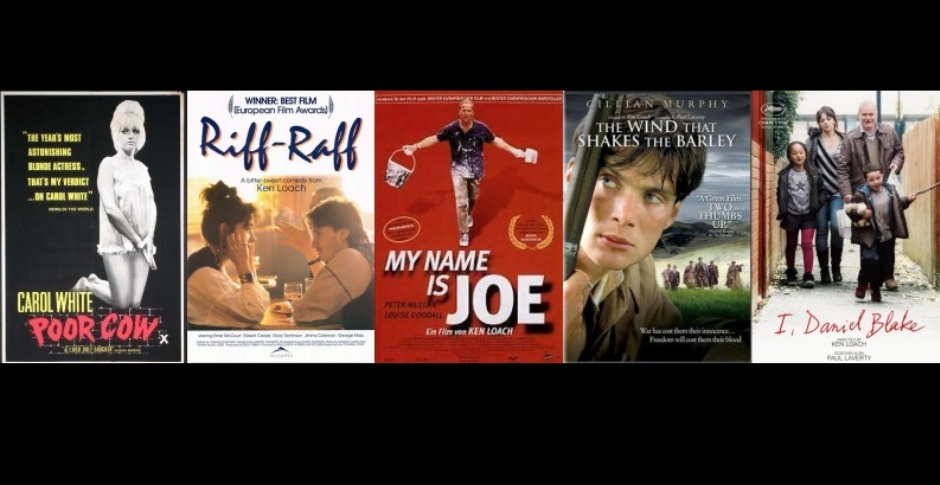
Both his documentaries and fiction films—many of which are collaborations with screenwriting partner Paul Laverty, represent a history of the English working class over the last half-century. In the current era of film production, in which it’s practically impossible to imagine a filmmaker having a continuous platform to create working class stories with an unapologetically left-wing perspective, Loach’s oeuvre remains remarkable.
Loach’s most successful films explore the aspects of human life where the personal intersects with the political.Loach points out that a lack of economic opportunity not only causes financial hardship, but also psychological effects, including depression and wastefulness.
In the hands of a less-skilled director, such dire and dramatic scenarios would send audiences screaming out of the theatres. However, through an unassuming, yet artistic visual style, careful narrative construction, and sympathetic performances, Loach creates an authenticity that provides a platform for society’s marginalised voices. By emphasising characterisation over ideology, Loach’s political points arise naturally out of emotions and situations rather than lectures.
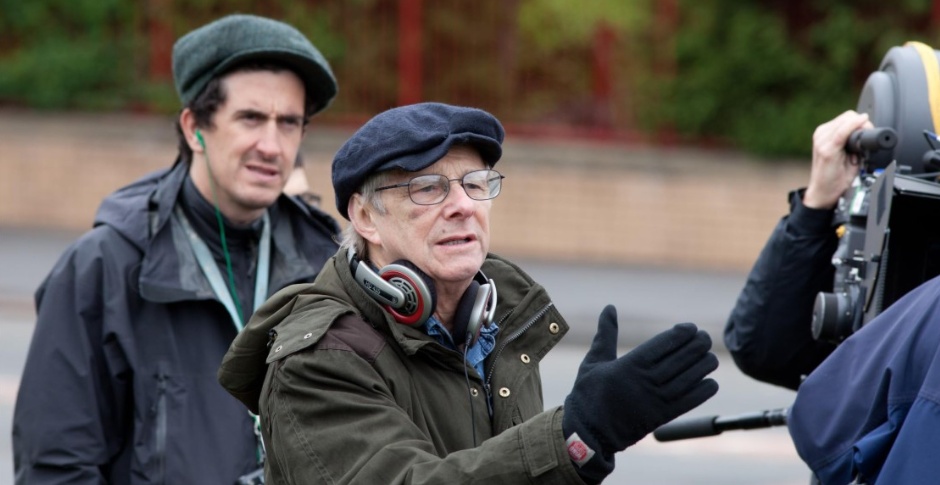
He has also very specific aproach to actors and the way he presents final work. No big gestures and narcisist comments, but humble words showing that the whole cast and crew are one big family.
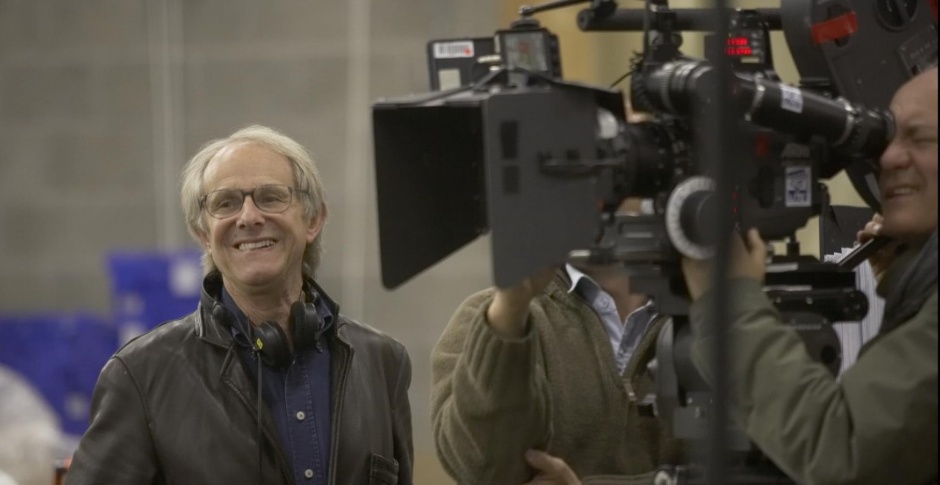
He never shoots in a studio, choosing instead to produce films on location in order to pick up on local details
Every film begins with casting. Often using non-professionals, Loach spends a great deal of time interviewing potential actors in order to ensure that their sensibilities or experiences relate well to the character. He rejects Hollywood standards of beauty and casts actors who look and sound like genuine members of the community in which his stories are set. To preserve the integrity of regional dialects, he insists that his films (most of which take place in Northern Britain) feature the accents and colloquialisms of the area. Distributors consistently urge him to polish the dialogue for commercial viability, but he discards this notion for the sake of authenticity. As a result, for example, both Riff-Raff and Sweet Sixteen arrived in the United States with subtitles (English subtitles for English dialogue!).
Visually, Loach adopts an unobtrusive style that depicts events in a naturalistic, yet pictorial manner. He never shoots in a studio, choosing instead to produce films on location in order to pick up on local details.
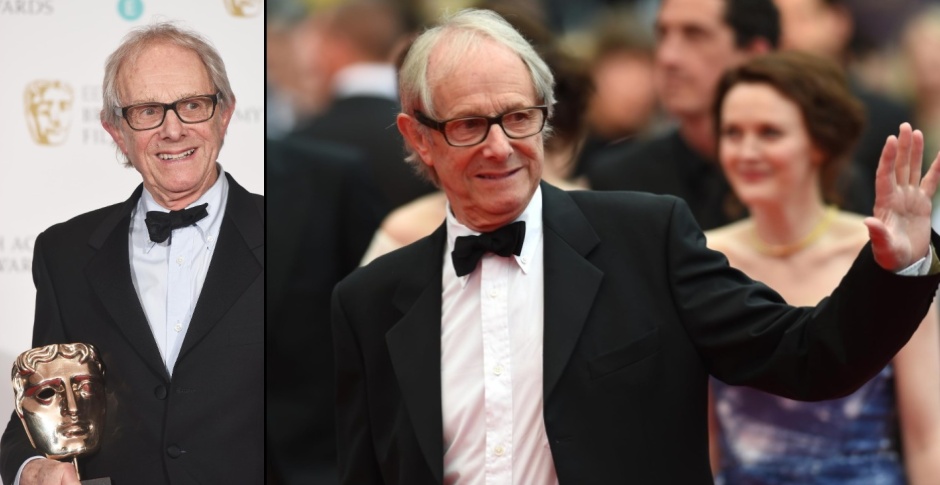
Communal debate also defines the way in which he produces his films. Unlike most directors who routinely overstate the importance of their personal achievements, he carefully refers to his films as team efforts and celebrates the contributions of his collaborators. In interviews, he stresses “we” and “us” over the authoritative “I”.
Despite political ebb and flow, fickle artistic trends and film financing difficulties, he remains steadfast in his commitment to progressive ideals and a personal cinema. Loach’s films are art of the highest order. While exposing the failings and limitations of human experience, they also provide a path to change and progress. His body of work firmly celebrates the fact that life is worth living.
Ken Loach, the beloved chronicler of proletarian life and resistance, is retiring after having directed 28 features and over two dozen BBC teleplays over the last six decades. His films have consistently merged politics and drama, presenting the lives of everyday people and their struggles under capitalism with compassion and honesty. They have also consistently provoked major discussion. His 1966 teleplay, Cathy Come Home, exposed 12 million viewers to the plight of homelessness and spurred discussion in Parliament for years to come. More recently, 2016’s I, Daniel Blake, which won Loach his second Palme d’Or at the Cannes Film Festival, prompted a similar nationwide debate in Britain about the country’s callous and convoluted welfare system.
In April 2024, he confirmed that his 2023 film The Old Oak would be his last.The Old Oak premiered at the 2023 Cannes Film Festival, receiving a ten-minute standing ovation and critical praise for its social commentary.
THANK YOU Mr. LOACH FOR ALL YOUR WORK. YOU ARE ONE OF A KIND.
Photos, thanx: IMDb